CULTURE · WHATSAKE STORIES
Sake and health: read the bottle clearly
Ingredients, strength and the size of a pour.
Read the story
CHAPTER 01
Enjoy the craft without a health halo
Sake has a fascinating brewing culture. That is a good reason to learn about it, but it is not a reason to treat an alcoholic drink as a supplement. Rice, koji and carefully managed fermentation do not make sake exempt from alcohol-related health risks.
WHO states that no safe consumption level has been established in relation to cancer risk. NIAAA also describes health risks at low amounts across beverage types. A bottle’s heritage, price or “natural” presentation does not settle those questions.
This guide focuses on what you can read and measure: ingredients, alcoholic strength, serving volume and production terms. It does not offer a personalised drinking allowance. For the evidence behind common health claims, continue to our health myths article.
Sources: WHO: alcohol and cancer · NIAAA: effects on the body
CHAPTER 02
Fermentation explains the drink, not a benefit
Sake begins with rice, koji and water, with yeast involved in fermentation. Enzymes make rice starch available as sugars, and yeast produces alcohol. Some production categories also allow added brewer’s alcohol. Pressing separates the liquid from much of the solid residue, called sake kasu.
These facts explain how the drink is made. They do not establish that drinking it gives you a useful nutritional dose of a compound, or that a component produces a clinical benefit. The finished beverage, an isolated ingredient and a laboratory preparation are different things.
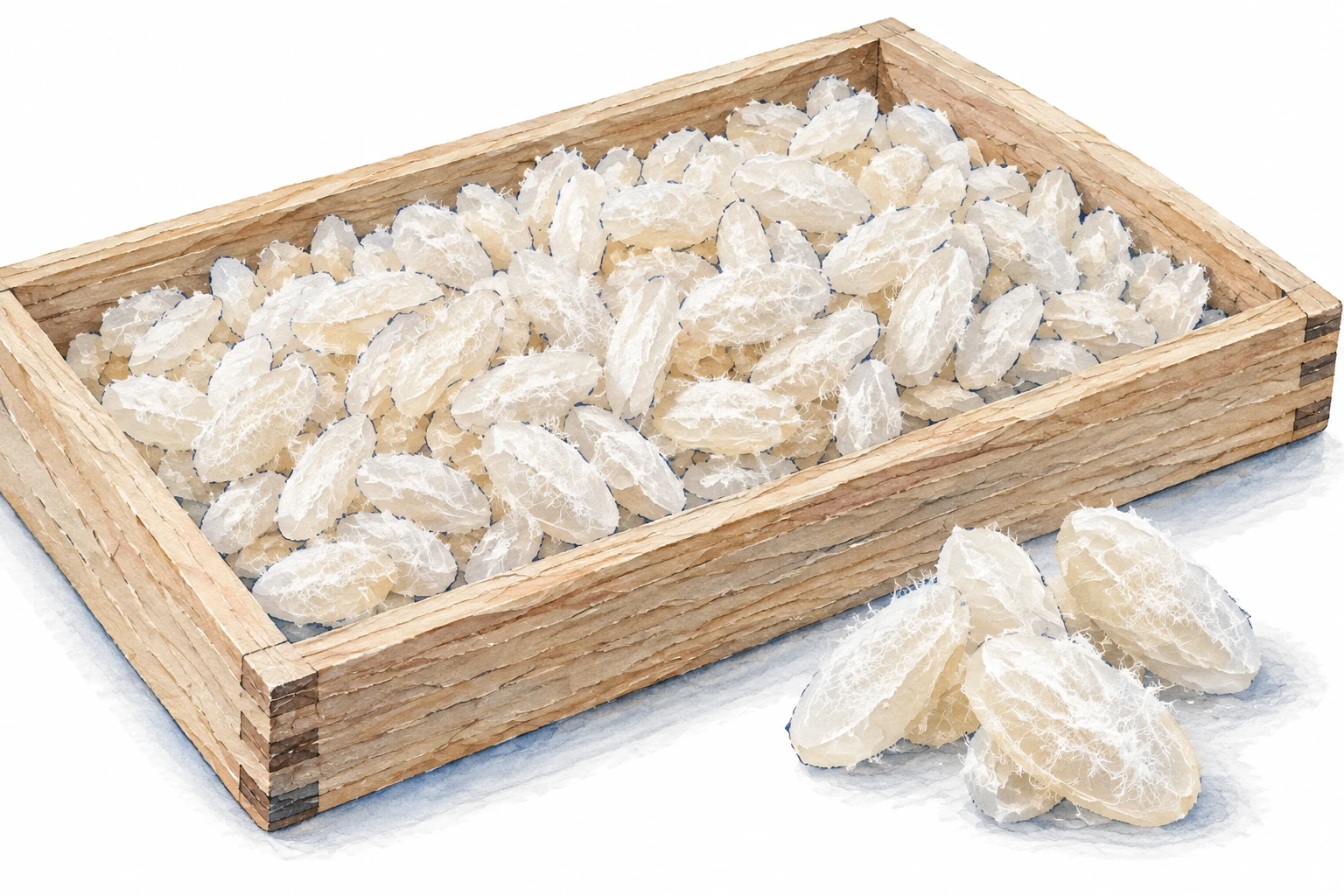
Rice
The starting grain and part of the brewer’s flavour design.
Koji
Cultivated rice that contributes enzymes to the process.
Yeast
The microorganism involved in turning sugars into alcohol.
Finished sake
An alcoholic beverage whose actual label matters.
If an ingredient restriction matters to you, check the particular product. A short general description cannot certify every sake, liqueur, cocktail or flavoured product in the category.
Sources: NRIB: what sake is
CHAPTER 03
Three things to read before the style name
On Japanese sake labels, the information described by NRIB includes alcoholic content, ingredients and net volume. Those details do different jobs. The style name is useful for production context, but it does not replace them.
Alcohol by volume
ABV is the alcohol proportion of the drink. Read the number on the actual bottle.
Serving volume
A 30 ml taste and a 180 ml serving contain different quantities, even from the same bottle.
Ingredients
Check the producer’s product information for a dietary or ingredient question.
Write the details down together if you are comparing bottles. “A small cup of junmai” leaves important information missing: what was its strength, how much was poured, and was the cup refilled?
Labelling and dietary requirements differ between markets. If the label does not answer a question, contact the producer or an appropriate professional rather than relying on a general statement about sake.
Sources: NRIB: Japanese label terms
CHAPTER 04
Junmai and ginjo are not health ratings
Junmai means no added brewer’s alcohol; it still contains alcohol made during fermentation. Ginjo describes a production category involving polished rice and a particular brewing approach. Ginjo without “junmai” is not a promise of no added brewer’s alcohol.
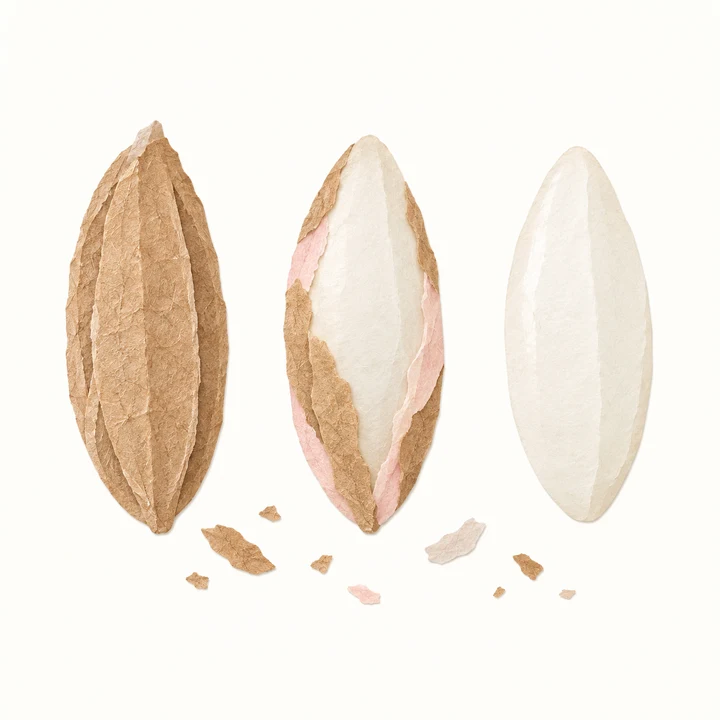
A polishing percentage expresses the proportion of the original grain remaining. It is a production figure, not the percentage of alcohol and not a nutrition score. Daiginjo’s smaller grain percentage does not demonstrate a health advantage.
The same distinction is useful for words such as “pure”, “traditional” and “artisan”. They may describe a producer’s approach, but a health conclusion needs evidence about health outcomes.
Sources: NRIB: sake varieties
CHAPTER 05
Strength and volume belong together
The NHS defines one UK alcohol unit as 10 ml of pure alcohol. To calculate UK units, multiply the drink’s ABV percentage by its volume in millilitres and divide by 1,000. Different countries use different standard-drink definitions.
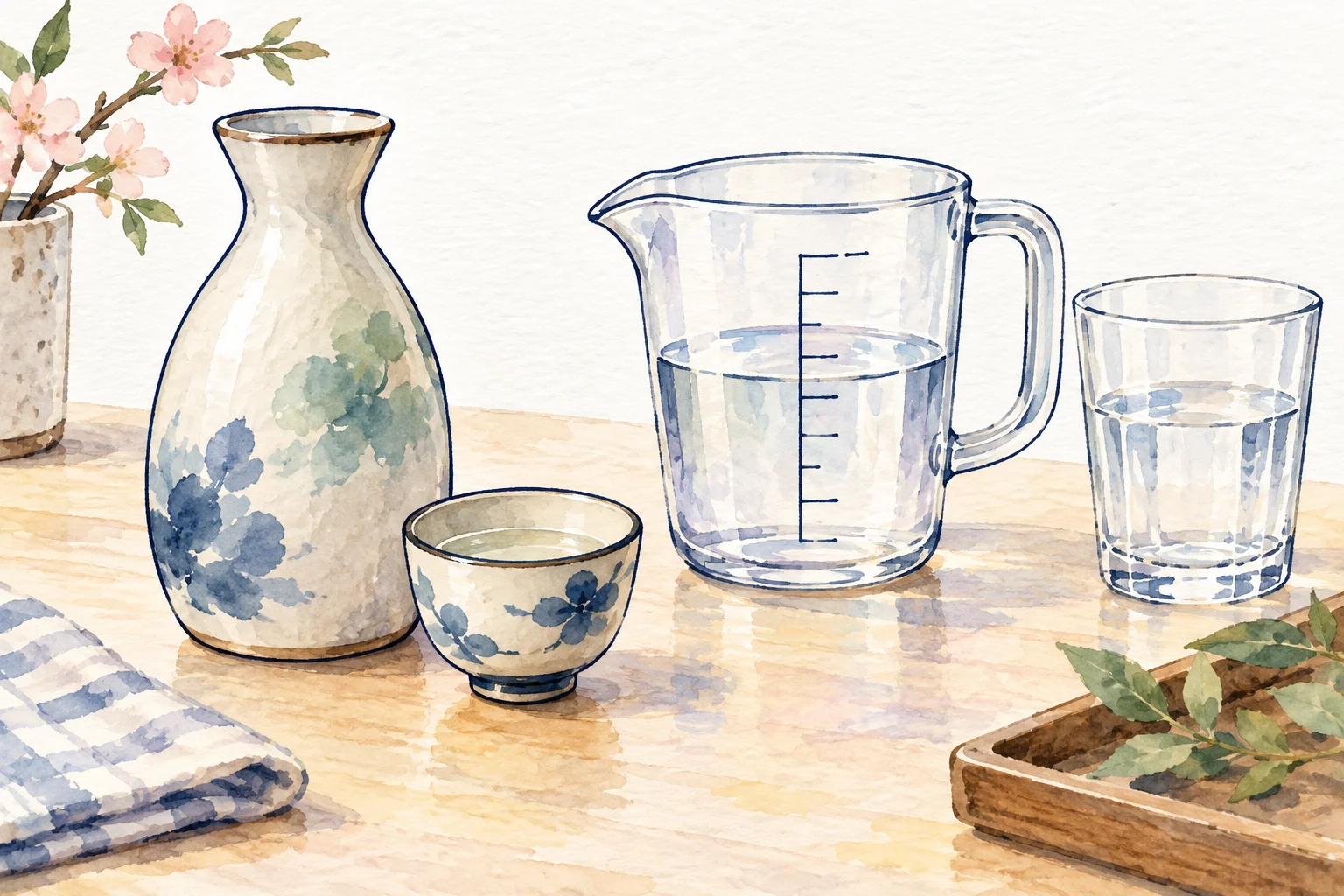
30 ml at 15% ABV
0.45 UK units.
60 ml at 15% ABV
0.9 UK units.
90 ml at 15% ABV
1.35 UK units.
180 ml at 15% ABV
2.7 UK units.
These are arithmetic examples, not suggested servings. They show why the cup’s size and number of refills matter. A lower ABV than a spirit does not by itself mean less alcohol consumed; the amounts must also be compared.
Explore the numbers
An arithmetic tool using the UK definition, not a drinking recommendation or personal risk estimate.
Sources: NHS: calculating UK alcohol units
CHAPTER 06
Make the information useful at the table
Use a measured pour if you want to understand quantity. A familiar cup is only a measure once you know its capacity. When several people share a bottle, keep track of your own refills rather than dividing the bottle mentally at the end.
If you choose to drink less alcohol, a smaller measured amount or an alcohol-free option changes the amount consumed. Water alongside a meal can be pleasant, but it does not cancel alcohol already drunk.
There is no reason to start drinking sake for a hoped-for health benefit. The practical value of the label is that it lets you make a clearer choice, not that it turns the drink into something risk-free.
For serving ideas that focus on flavour rather than health claims, visit how to drink sake. If a medical condition or treatment is relevant to your decision, seek advice from your healthcare professional.
CHAPTER 07
Common label questions
Does junmai mean alcohol-free?
No. It means no added brewer’s alcohol. Fermentation still produces alcohol.
Does a small cup guarantee little alcohol?
No. The cup volume, the drink’s ABV and the number of refills all matter.
Is sake always suitable for every dietary restriction?
A production category cannot answer that for every product. Check the actual ingredients and producer information.
Is expensive sake healthier?
A price or style label does not demonstrate a health advantage. Use those details for flavour and production context.