
EXPLORE SAKE BY TOPIC
Food
pairing
Start with your plate.
Discover what works together.
Learn how to pair sake with food, from sushi and grilled dishes to cheese, vegetables and the pasta you’re making tonight.
Start with the flavours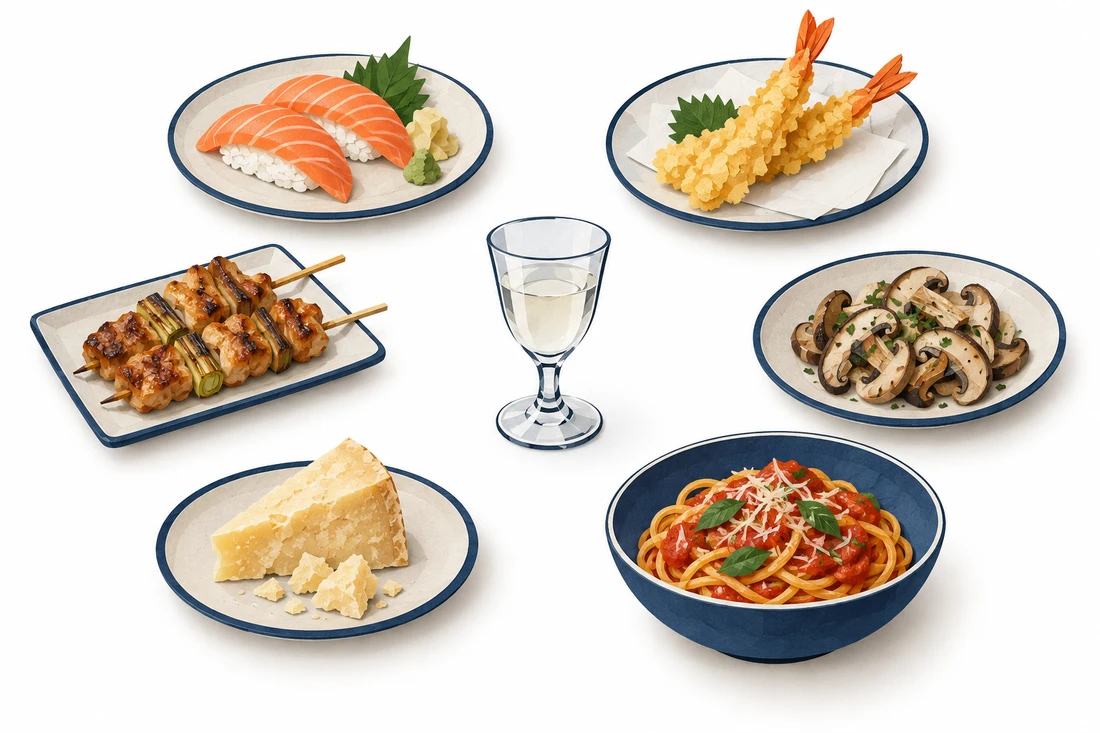
A SIMPLE WAY TO BEGIN
How to pair sake with food
Match the character of the dish with the character of the sake. You don’t need a perfect pairing chart to start.
A steamed white fish and a sticky barbecue rib ask for different things, even if they’re served at the same table. Start with flavour intensity, then think about aroma, texture and the sauce.
Match the intensity
Delicate food is a good place to explore a lighter sake. A richer dish gives a fuller sake more room to stand out.
Try: lightly seasoned fish with a light, clean sake.
Find a shared flavour
Look for an echo between the food and the drink: savoury with savoury, nutty with nutty, or a fruity aroma alongside fresh ingredients.
Try: mature cheese with a nutty aged sake.
Explore a contrast
A pairing can feel refreshing rather than similar. Compare a crisp still sake or a dry sparkling sake with a rich bite.
Try: tempura with a clean finish or gentle bubbles.
Junmai doesn’t automatically mean sweet. Nigori doesn’t promise sweetness either, and Honjozo isn’t inherently sparkling. Use the actual bottle’s description.
Sources: JSS: Matching intensity and aroma · MAFF: Similarity, contrast and refreshment in cheese pairing. For label meanings, see our types and styles guide.
START WITH WHAT YOU’RE EATING
Find a sake pairing to try
Choose the kind of food, then tell us if a sauce or seasoning leads the flavour. Use the suggestion as a starting point, and check the bottle’s tasting notes.
A MATCH TO EXPLORE
Light sake with delicately seasoned seafood
Explore a lighter Ginjo or Daiginjo, including their Junmai versions. Read the bottle’s actual aroma and flavour notes.
Give the fish room to speak. Richer fish or a strong sauce may call for a fuller sake.
Try a bite, then a sip. Can you still taste both?
The styles are loose ideas, not fixed matches. Preparation, sweetness and your own preferences matter.
FROM SUSHI TO SUPPER
Practical sake pairings for everyday food
The tags give you concrete styles to explore. They’re loose starting points: read each bottle’s tasting notes and let the dish and your taste decide.
Ginjo and Daiginjo include their Junmai versions. A style name is a clue, not a promise of flavour.
Sushi & seafood
Loose rule of thumb: Ginjo or Daiginjo, including their Junmai versions, are useful places to look for lighter, aromatic bottles. With richer fish, explore a fuller Junmai too.
Notice: soy sauce, wasabi, butter and citrus can change the balance. A plain piece of fish and a spicy roll are different pairings.
Tempura & fried food
Loose rule of thumb: a clean Honjozo or Tokubetsu Honjozo for a crisp still option; dry sparkling sake for bubbles. Look for a clean finish in the actual bottle.
Notice: whether the next bite feels fresh. Check the sparkling bottle’s sweetness instead of assuming bubbles mean dry.
Grilled meat & skewers
Loose rule of thumb: a fuller Junmai or Tokubetsu Junmai. Savoury Kimoto or Yamahai can be worth exploring with grilled or smoky flavours.
Notice: salted yakitori and sweet glazed yakitori ask different questions. Taste the glaze as well as the chicken.
Cheese
Loose rule of thumb: nutty Koshu for mature hard cheese, savoury Kimoto or Yamahai for an earthy cheese, or sparkling sake for fresh cheese.
Notice: saltiness, creaminess and strength. Cheese can be a whole tasting, not just a snack beside the bottle.
Vegetables & mushrooms
Loose rule of thumb: a savoury Junmai or Kimoto with roasted mushrooms or miso-rich dishes. A lighter Ginjo is a useful starting point for a fresh salad.
Notice: dressing, roasting and miso can matter more than the vegetable. A mushroom broth and a lemony salad needn’t share one match.
Pasta & pizza
Loose rule of thumb: Junmai with mushroom or cream pasta, Ginjo with simply dressed seafood pasta, or a clean Honjozo with a savoury pizza. Let the sauce guide you.
Notice: tomato, cheese, oil and chilli pull the meal in different directions. There is no single “Italian food” pairing.
Spicy dishes
Loose rule of thumb: a chilled, gently sweet Nigori or a Junmai described as sweeter. Check the actual sweetness; neither name guarantees it.
Notice: cloudiness alone doesn’t tell you how sweet it is. Compare a small sip with the spice level you actually eat.
Dessert
Loose rule of thumb: Koshu with nutty or caramel notes for chocolate or vanilla, a sweeter Nigori for creamy desserts, or a sweeter sparkling sake with fruit.
Notice: the dessert’s sweetness. A very sweet dish can make a less sweet drink seem sharper; taste them together.
Try sparkling umeshu with a fruit tart, or yuzushu with a citrus dessert or cheesecake. These are fruit liqueurs, rather than sake categories; check the bottle’s sweetness. Treat the combinations as experiments.
Starting points adapted and expanded from WhatSake’s original pairing article, with references from JSS: Seafood, JSS: Salad, JSS: Dessert and WSET: Cheese. Pasta and seasoning suggestions are practical experiments using the principles above. Fruit-liqueur definitions: CHOYA: Yuzu liqueur · Nakata Foods: Sparkling umeshu. Dessert combinations with these liqueurs are ideas to try.
AN EASY PAIRING TO EXPLORE
Pair sake with cheese
Cheese and sake can share savoury depth and fermentation aromas. That gives you a useful starting point for comparing different styles at home.
Ricotta or fresh chèvre
Try a sparkling sake with a sweetness level you enjoy. Compare the creamy bite with the bubbles and finish.
Comté, Cheddar or Parmesan
Explore an aged sake with nutty notes. See whether the mature flavours connect, without either one taking over.
A truffle-flavoured cheese
Try a savoury Kimoto or Yamahai recommended for gentle warming. Look for an echo between the aromas.
Choose two cheeses and one sake, rather than buying a full range. Taste the sake alone first; then compare which cheese changes it in a way you enjoy.
Sources: JSS: Savoury depth and fermentation aromas · WSET: Fresh, mature and truffle cheese examples.
THE DETAIL THAT CHANGES THE MATCH
Let sauces, seasoning and spice guide you
“What sake goes with chicken?” is a start. “Chicken with lemon, cream or chilli?” gets you much closer.
Light seasoning
Explore a restrained sake when you want the main ingredient to stay clear. Notice whether a powerful aroma distracts from the dish.
Rich or creamy sauce
Try a rounded, fuller sake alongside the texture of the food. Then compare a cleaner, crisper sake if you prefer a refreshing contrast.
Sweet glaze
Check how the sweetness changes the sake. Start with a bottle that has enough flavour to remain noticeable beside the glaze.
Chilli or tangy dressing
With chilli, explore actual sweetness rather than a category name. With citrus or vinaigrette, try a fruity or softly rounded sake and assess the combination.
Think about roasted mushrooms, miso aubergine, tomato pasta or tofu with dressing. Pairing starts with flavours and preparation, rather than whether a dish contains meat.
References: JSS: Umami and varied cuisines · JSS: Citrus and vinaigrette. Sauce suggestions are tasting experiments, not fixed rules.
LEARN BY COMPARING
Try a simple sake and food experiment
Use one sake and two small bites you already enjoy. Keep the glass and serving temperature the same so the food is the main thing that changes.
Taste the sake on its own
Notice the aroma, sweetness, texture and finish. A couple of plain words are enough.
Take a bite, then a small sip
Do the food and sake remain distinct? Does something become softer, fuller, brighter or more savoury?
Compare with a second bite
Try the same sake with the other food. Water between comparisons gives you a useful pause. Decide which combination you’d repeat.
Three useful questions
- Can I still taste both the food and the sake?
- Does the combination create a flavour or texture I enjoy?
- Do I want another bite of this pairing?
Can serving temperature change the pairing?
Yes. After your first comparison, change only the temperature of a small portion of the same still sake. Compare it with the same bite. Use the brewer’s advice for warming and keep sparkling sake chilled. Our tasting and serving guide explains the practical steps.
For a shared meal, offer one adaptable sake rather than searching for a perfect bottle for every dish. Invite people to describe the pairings in their own words.
Reference: NRIB: Pairings and serving temperature.
THE EVERYDAY QUESTIONS
Sake food pairing questions
Does sake only go with Japanese food?
No. Cheese, pasta, grilled meat and vegetables are useful places to explore. Consider the actual dish’s flavour and preparation, then try a small comparison.
What sake should I choose for sushi?
Begin with a light, clean sake for delicately seasoned fish. Richer fish, spicy mayonnaise or a sweet sauce may suit a fuller style. “Sushi” covers very different flavours.
Is Nigori always the best choice for spicy food?
No. Nigori describes cloudiness, not a guaranteed level of sweetness. A gently sweet example can be worth trying, but check the actual bottle and your own preference.
Can I serve one sake with a whole meal?
Yes. Choose a style you enjoy with the strongest flavour on the table and let people compare it with different bites. You don’t need a separate bottle for every course.
Does more expensive sake make a better pairing?
Price doesn’t tell you whether a sake fits your dinner. Match the drink’s character to the food and check how they taste together.
Further reading: JSS: Food pairing basics · WhatSake: Category and style descriptions.