
EXPLORE SAKE BY TOPIC
Sake types
& styles
Understand the names.
Find your next starting point.
Compare the brewing categories, learn what the extra label words mean, and explore sake by the flavours and textures you enjoy.
Start with the basics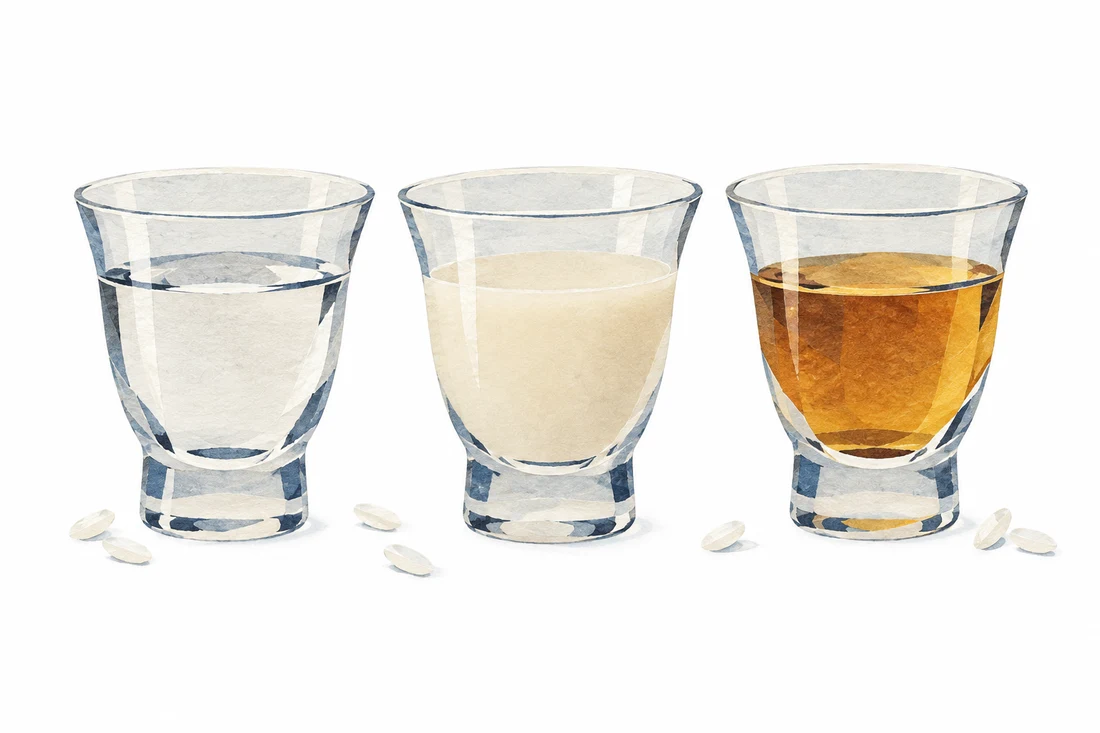
THE MOST USEFUL DISTINCTION
Sake types and styles describe different things
“Junmai Ginjo” and “Nigori” aren’t competing choices. A single sake can be both.
Ingredients and production
Names such as Junmai, Honjozo, Ginjo and Daiginjo describe defined brewing requirements. Some combine an ingredient choice with a polishing limit and brewing technique.
Example: Junmai Ginjo
An extra clue about the sake
Words such as Nigori, Nama and Genshu tell you about cloudiness, pasteurisation or dilution. These descriptions can overlap with each other and with a brewing category.
Example: Nama Nigori
The category tells you about how it was made. Extra descriptions add detail. The brewer’s tasting notes tell you more about that particular bottle.
Source: Japan Sake and Shochu Makers Association: Sake label terms
A QUICK REFERENCE
Compare the eight brewing categories
The key ingredient distinction is added brewer’s alcohol. “Junmai” means none has been added. The other special designations allow a limited addition, which is a deliberate brewing choice.
Junmai and Honjozo
Junmai
No prescribed polishing-ratio limit.
Honjozo
Rice polished to 70% or less remaining.
Ginjo categories
Junmai Ginjo
60% or less remaining, with ginjo brewing techniques.
Ginjo
60% or less remaining, with ginjo brewing techniques.
Daiginjo categories
Junmai Daiginjo
50% or less remaining, with ginjo brewing techniques.
Daiginjo
50% or less remaining, with ginjo brewing techniques.
Tokubetsu: “special”
Tokubetsu Junmai
60% or less remaining, or a special production process explained on the label.
Tokubetsu Honjozo
60% or less remaining, or a special production process explained on the label.
This simplifies the eight special designations. Other production and quality requirements also apply. The percentages describe original rice weight remaining after polishing.
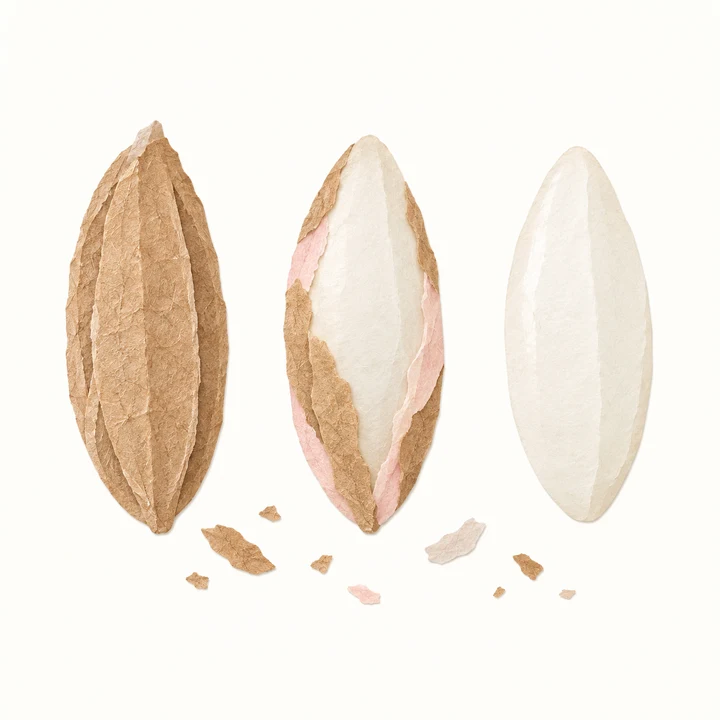
How to read a polishing percentage
60% means 60% of the original rice weight remains. The other 40% has been polished away. It doesn’t describe alcohol strength.
More polishing isn’t a universal quality ranking. Your favourite depends on the sake’s character and your taste.
What about Futsu-shu?
Futsu-shu means ordinary sake outside the special-designation categories. The term is broad; it doesn’t tell you whether you’ll enjoy that particular bottle.
Sources: NRIB: The special-designation categories · JSS: Polishing percentages · JSS: Brewing choices and flavour
THE EXTRA WORDS ON THE BOTTLE
Understand the style descriptions
These terms describe different features. They can appear together, and none guarantees one exact flavour.
Nigori
Cloudy sake
Coarse pressing leaves rice particles in the drink. Texture can be lightly cloudy or creamy.
Cloudy doesn’t automatically mean sweet.
Nama
Unpasteurised sake
Namazake hasn’t been pasteurised. Follow its cold-storage instructions.
Nama-chozo and namazume describe different single-pasteurisation patterns.
Genshu
Undiluted sake
Water hasn’t been added after brewing to adjust the alcohol strength.
Read the ABV. Genshu doesn’t specify a fixed alcohol percentage.
Sparkling
Sake with bubbles
Effervescence adds a different texture. Sparkling sake can be clear or cloudy.
Neither sweetness nor low alcohol is guaranteed.
Koshu
Aged sake
Deliberate maturation can bring colour and aromas such as nuts, caramel or spice.
Ageing methods vary, so not all Koshu is dark or intensely flavoured.
Muroka
Without charcoal filtration
Commonly used for sake that skips charcoal filtration after pressing.
It can still be clear. Muroka and Nigori describe different steps.
Where do Kimoto and Yamahai fit?
These describe yeast-starter methods, rather than polishing categories. Both develop lactic acidity with lactic acid bacteria; Yamahai omits the traditional working of the rice mixture used in Kimoto. They may bring layered, savoury character, but the method doesn’t decide the entire flavour.
Sources: JSS: Processing and starter terms · JSS: Appearance, texture and ageing · JSS & NRIB: Sparkling sake
START WITH YOUR CURIOSITY
Find a sake style to explore
Choose an experience you’re curious about. Use it as a conversation starter with a shop or restaurant, then check the bottle’s tasting notes.
A STARTING POINT TO EXPLORE
Look for aromatic Ginjo or Daiginjo
Read descriptions for fruit or floral aromas. Both the Junmai and added-alcohol versions can be aromatic; the individual brewer’s choices matter.
Ask: “Which bottle has fruity or floral aromas?”
These are starting points, not promises. A category name can’t tell you everything about a sake.
PUT THE TERMS TOGETHER
Read a sake label in three steps
Take the example “Junmai Ginjo Nama Genshu”. Breaking it into small pieces is much easier than treating it as one long name.
Find the brewing category
Junmai Ginjo: no added brewer’s alcohol, ginjo brewing, and rice polished to 60% or less remaining.
Read the extra descriptions
Nama: unpasteurised. Genshu: undiluted for alcohol adjustment. The words add separate clues.
Check the practical details
Look at the actual ABV, storage advice and tasting description. They tell you more about this bottle than the category alone.
Want to combine the terms yourself? Try the label decoder in our beginner’s guide.
CLEAR UP THE COMMON CONFUSIONS
Common questions about sake types
Is Daiginjo always better than Junmai?
No. They describe production choices. A fuller, savoury Junmai may suit your meal or taste better than an aromatic Daiginjo.
Does Junmai mean alcohol-free?
No. It means no added brewer’s alcohol. Fermentation still creates alcohol.
Can Nigori also be Nama or Genshu?
Yes. Cloudiness, pasteurisation and dilution are separate features, so these descriptions can appear together.
Can I choose hot or cold sake from the category alone?
The category can suggest a starting point, but follow the brewer’s serving recommendation and your own taste. Our temperature explorer helps you compare.