
CULTURE · WHATSAKE STORIES
Five sake cocktails to make your own
A little citrus. A little creativity.
Read the story
CHAPTER 01
Choose a sake you understand first
A cocktail can introduce sake in a familiar setting: mint, citrus, tomato or a chilled mixing glass. The aim is to build a balanced drink with the bottle you have, rather than to hide an unfamiliar ingredient under sugar.
Taste a small amount of the sake before mixing. Is it dry-seeming, gently sweet, savoury or fragrant? Use that impression when deciding how much syrup or citrus to start with. You do not need an expensive bottle, and a category name alone does not promise a particular taste.
The recipes below are WhatSake starting recipes, adapted and rebalanced from our earlier roundup. They are not universal classics or a claim that every bottle will work identically. Quantities are for one drink, except the sangria-style pitcher.
Keep sparkling sake out of a sealed shaker. If a recipe uses bubbles, add them after the shaking or stirring.
CHAPTER 02
Sake-tini: sake, spirit and vermouth
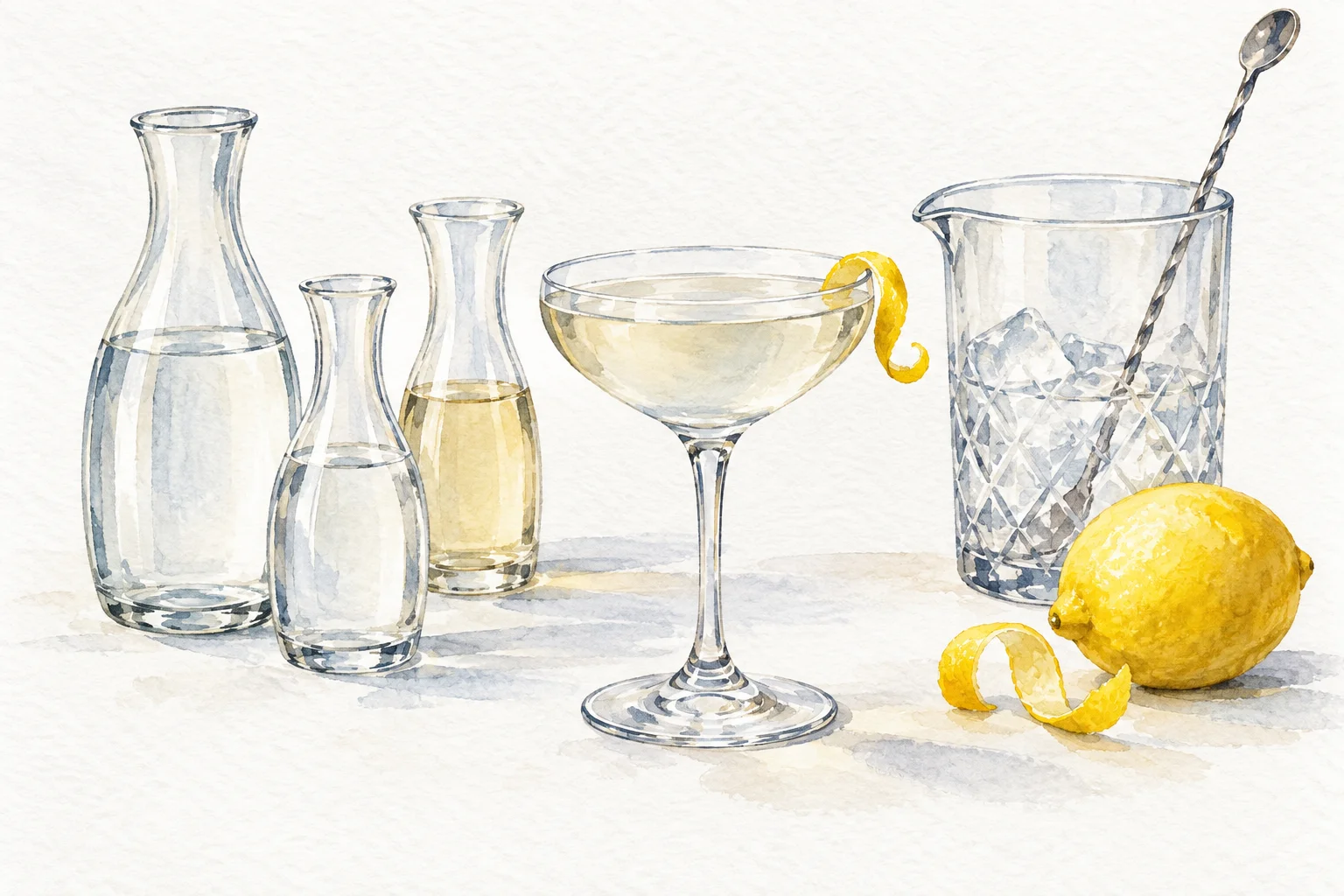
A short, spirit-containing drink for when you want the sake to sit alongside the familiar structure of a martini. Stirring gives you a straightforward way to chill and dilute without froth.
Ingredients
60 ml still sake · 20 ml gin or vodka · 10 ml dry vermouth · lemon peel · ice.
Method
Stir the liquids with ice until well chilled. Strain into a chilled small cocktail glass, then express a little lemon peel over the top.
Gin brings its own botanical character; vodka gives you a simpler comparison. If the vermouth dominates, reduce it on your next attempt rather than immediately changing every ingredient. Keep notes so your preferred version is repeatable.
Choose the exact sake by taste. “Daiginjo works best” is too broad: a highly fragrant sake might compete with a botanical gin, while another may make a pleasing combination.
CHAPTER 03
Mint and lime sake highball
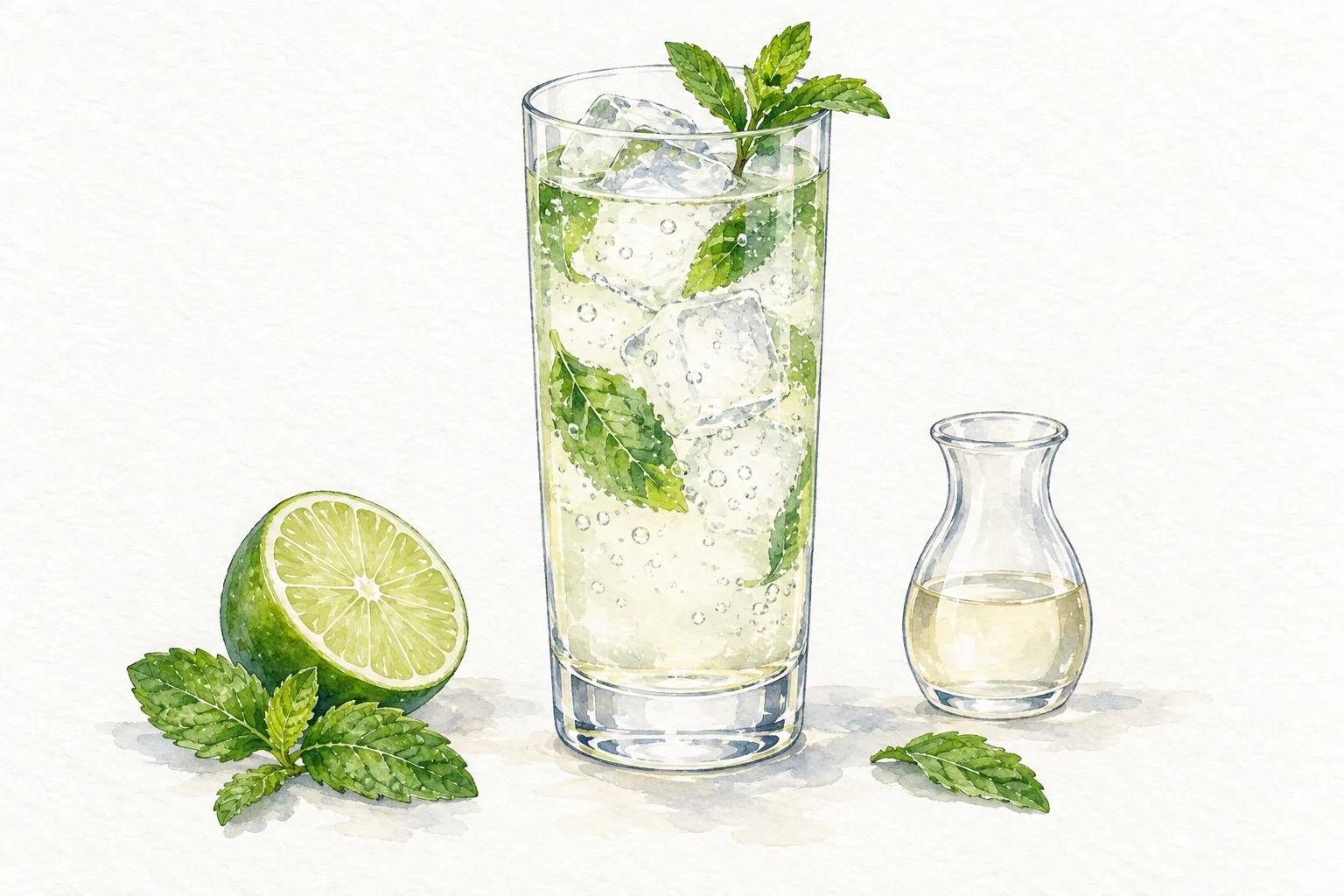
This mojito-inspired highball keeps the herb, citrus and soda structure but uses sake as the main alcoholic ingredient. Start gently with mint; you want aroma rather than a glass full of crushed leaves.
Ingredients
60 ml still sake · 15 ml lime juice · 10 ml simple syrup · 6 mint leaves · chilled soda water · ice.
Method
Press the mint gently with the syrup and lime in a tall glass. Add ice and sake, top with soda and stir lightly. Garnish with mint.
Adjust sweetness after tasting. A sweeter sake may need less syrup, while a sharper lime can change the balance. Increase soda for a lighter texture, remembering that the amount of sake you poured remains the same.
No mint? Try a cucumber-and-lime direction instead: press a couple of thin cucumber slices and use them as garnish. That is a variation, rather than a claim that it will taste like the mint version.
CHAPTER 04
Savoury sake and tomato
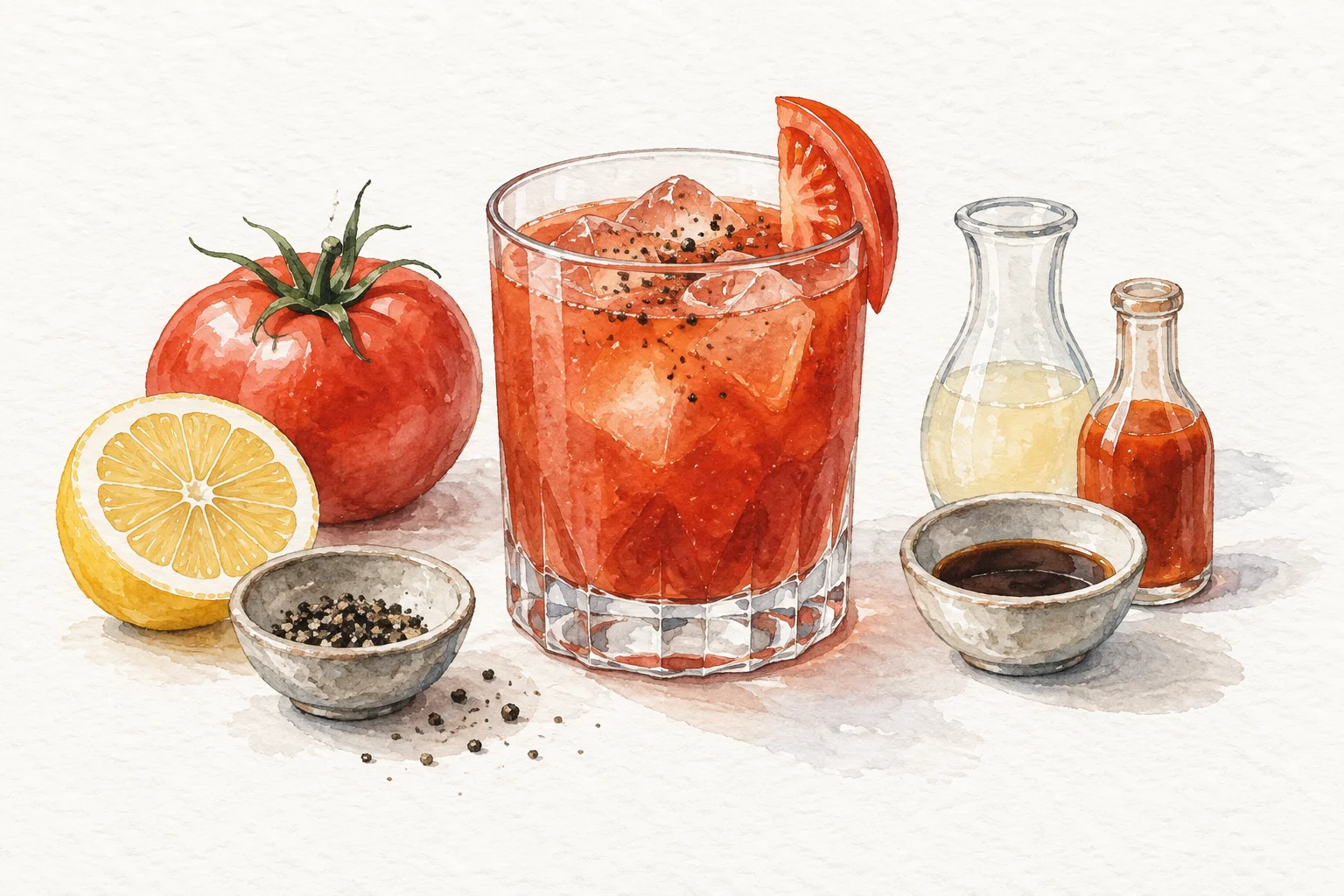
Tomato, lemon and seasoning give you a different path from the citrus-and-sugar model. Think of the seasoning like a dish: a little adjustment can matter more than adding another ingredient.
Ingredients
60 ml still sake · 120 ml tomato juice · 10 ml lemon juice · a dash each of hot sauce and Worcestershire sauce · pepper · ice.
Method
Stir or roll the ingredients gently between vessels, then pour over ice. Taste before adding salt, because the juice and sauces may already contain it.
Use a sake whose savoury character you enjoy. Keep the hot sauce modest for the first version, then decide whether the drink needs more heat or just more citrus. Worcestershire ingredients differ by brand; check the label if you avoid fish or other ingredients.
This is a flavour idea for a savoury cocktail, not a hangover treatment. A tomato garnish or a celery stick is optional; the balance in the glass comes first.
CHAPTER 05
A small sake sangria-style pitcher
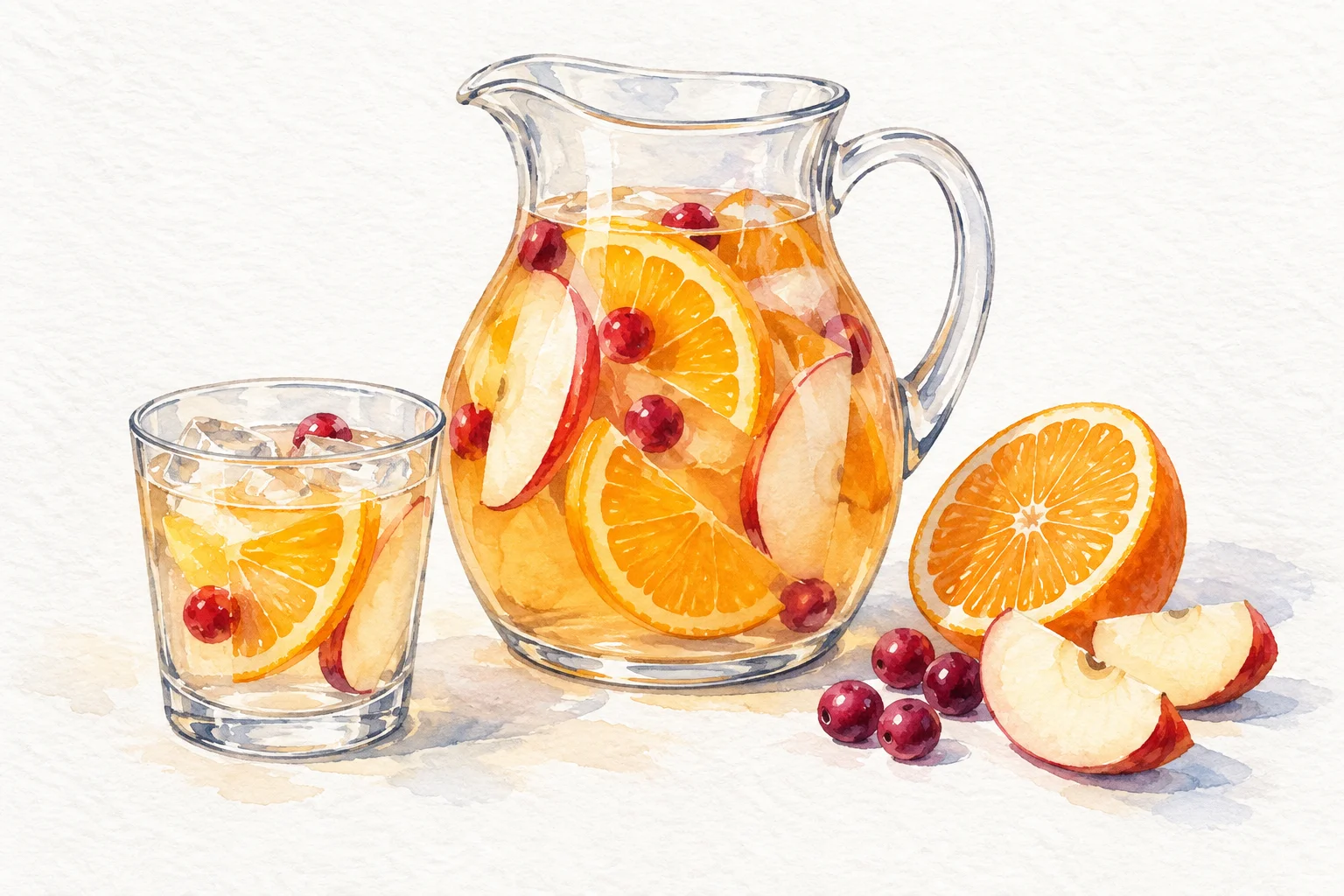
A pitcher is useful when you want a clearly measured batch rather than topping up several glasses by eye. This version leaves out the extra brandy and triple sec from the original roundup so the fruit-and-sake combination stays easier to understand.
For four small servings
240 ml still sake · 120 ml orange juice · 120 ml soda added at serving · a few orange and apple slices · a small handful of berries.
Method
Combine sake, juice and fruit, cover and chill. Divide between four glasses with ice; add the measured soda at serving and stir gently.
Choose fruit that you would enjoy with the bottle on its own. Taste the juice first: if it is very sweet, start with less and add a little more after comparing. The soda is added at the end to keep the serving lively.
Keep the prepared mixture refrigerated, make it close to serving, and follow the storage advice for the sake. The recipe is a small batch for sharing, not a storage method for an opened bottle.
CHAPTER 06
Yuzu sake sour
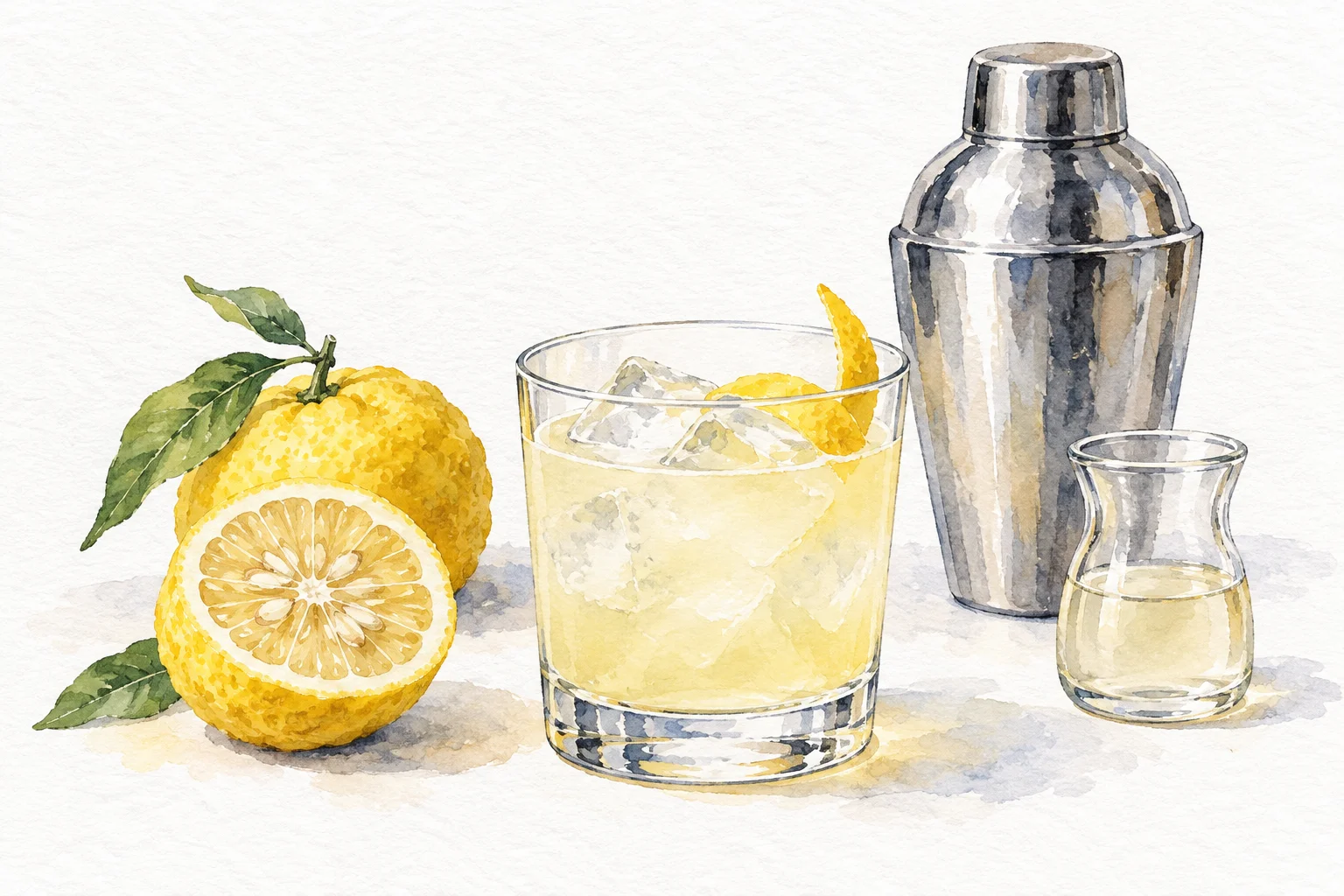
Citrus can lift a sake cocktail, but yuzu juice and yuzu liqueur are different ingredients. Juice adds acidity; a liqueur can add sugar and more alcohol as well. Check the bottle before substituting.
Ingredients
60 ml still sake · 15 ml yuzu or lemon juice · 10 ml simple syrup · ice. A still nigori is an optional texture-led variation.
Method
Shake the sake, juice and syrup with ice. Strain over fresh ice. Taste, then adjust the next drink to your bottle’s balance.
Nigori may change both sweetness and texture, so do not assume the same syrup amount works for every example. If your nigori is sparkling, do not shake it: choose a still bottle for this recipe instead.
For another citrus direction, explore our umeshu and yuzushu guide. A fruit liqueur is not the same category as sake, even when a product includes sake in its base.
CHAPTER 07
Make the next version better
What is simple syrup?
For these recipes, use equal weights of sugar and water dissolved together and cooled. Ready-made syrups vary, so check their description before comparing amounts.
Can I mix several changes at once?
You can, but it is harder to learn what worked. Change one ingredient or quantity, then keep a note of the difference.
What should I do with the rest of the bottle?
Follow the producer’s storage instructions. A cocktail is not a reason to ignore refrigeration requirements, especially for nama sake.
Are these low-alcohol cocktails?
Strength depends on the ingredients and serving volume. The sake-tini also contains spirits. Check the labels and measure each pour rather than judging strength by taste.
Explore tasting and serving for useful flavour vocabulary, or food pairing for ideas around the meal.