
SAKE STYLES · THE CLOUDY ONE
What is
Nigori sake?
A cloudy glass.
A whole world of texture.
Lightly hazy, silky or wonderfully creamy: nigori adds a different kind of character to sake. Discover what makes it cloudy, what to expect in your glass, and how to enjoy it.
Meet the clouds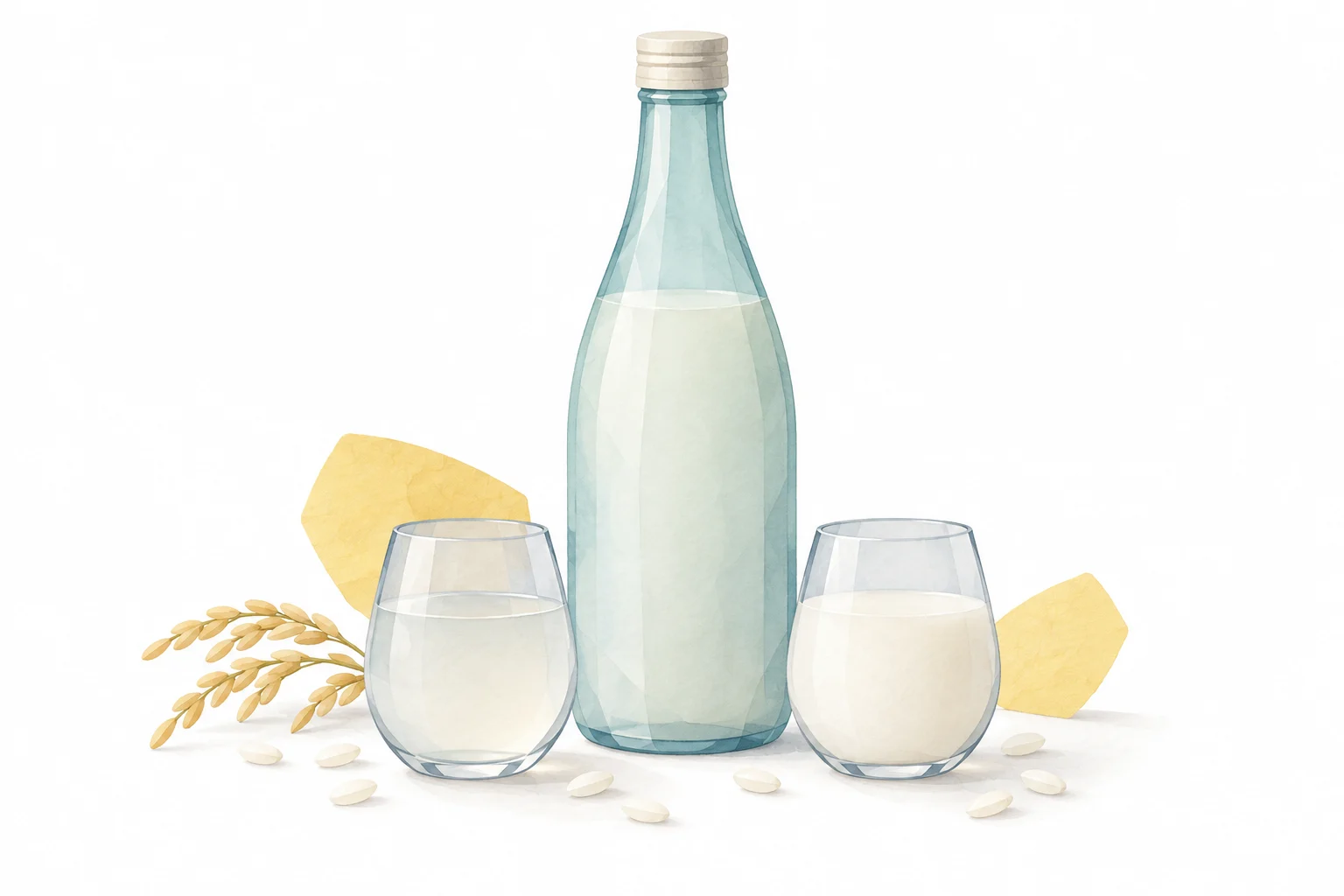
The bottle tells you the rest.
01 · FIRST, THE SIMPLE ANSWER
Nigori is cloudy sake
Nigori sake is sake with fine rice-derived solids left suspended in the liquid. They give it its haze and distinctive texture.
“Nigori” means cloudy. Some bottles look like a faint mist; others are milky white and feel rich on the tongue. Think of it as a style of sake, with a whole spectrum inside it.
What you see
A little haze or a creamy cloud of fine solids.
What you feel
Anything from light and silky to full and textured.
What to check
Sweetness, alcohol strength, bubbles and storage instructions.
It doesn’t automatically mean sweet, low in alcohol or sparkling. The individual bottle matters.
Sources: JSS: nigori sake · JETRO: cloudy sake and its range of flavours.
02 · FROM THE BREWERY TO THE CLOUDS
Why is nigori sake cloudy?
The difference happens when the fermented mash is separated.
Sake starts with rice, water, koji and yeast. Once the mash has fermented, brewers separate the liquid from the solids. Nigori’s coarser separation allows fine particles to remain in the sake.
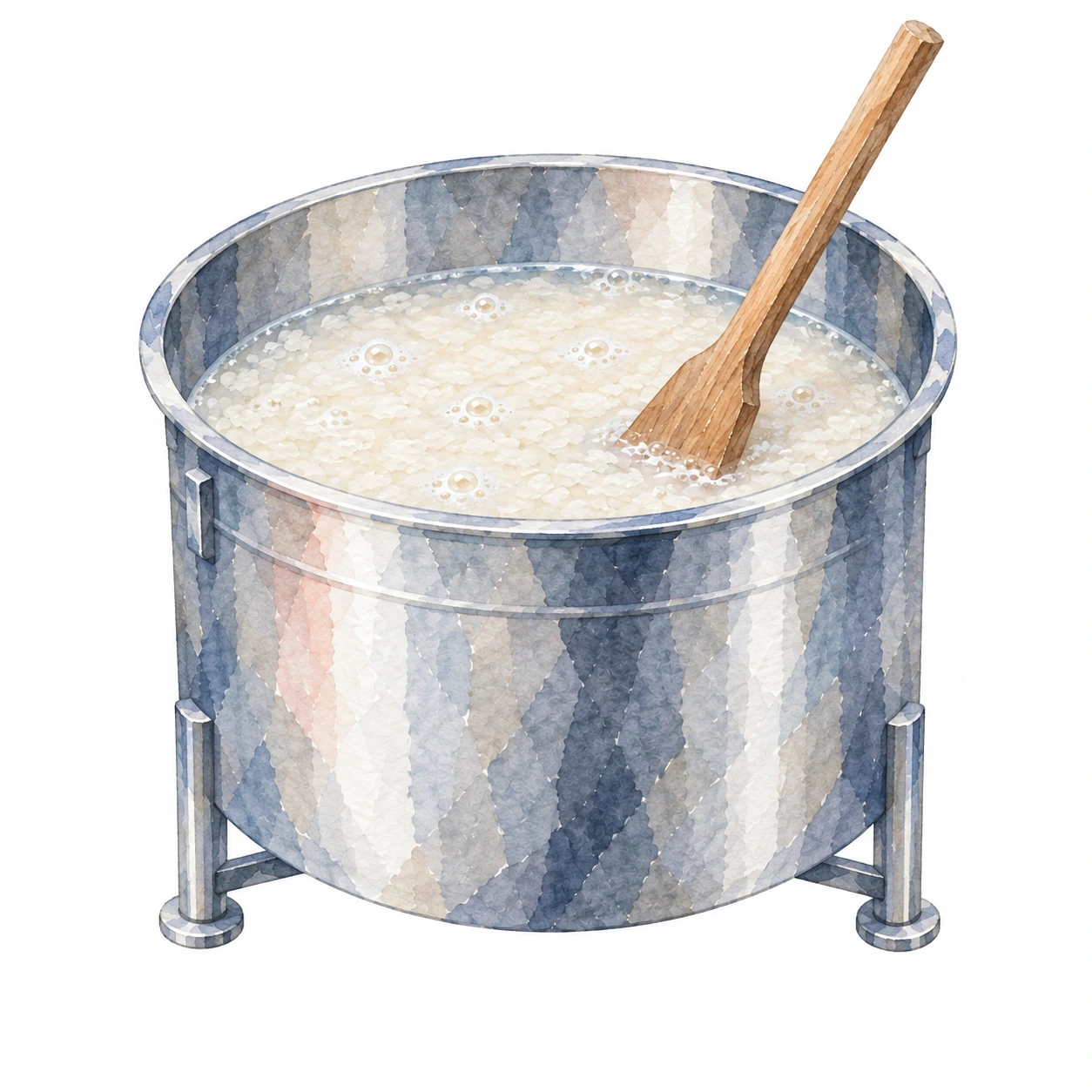
Rice becomes sake
Koji helps turn rice starch into sugars. Yeast turns those sugars into alcohol in the fermenting mash.
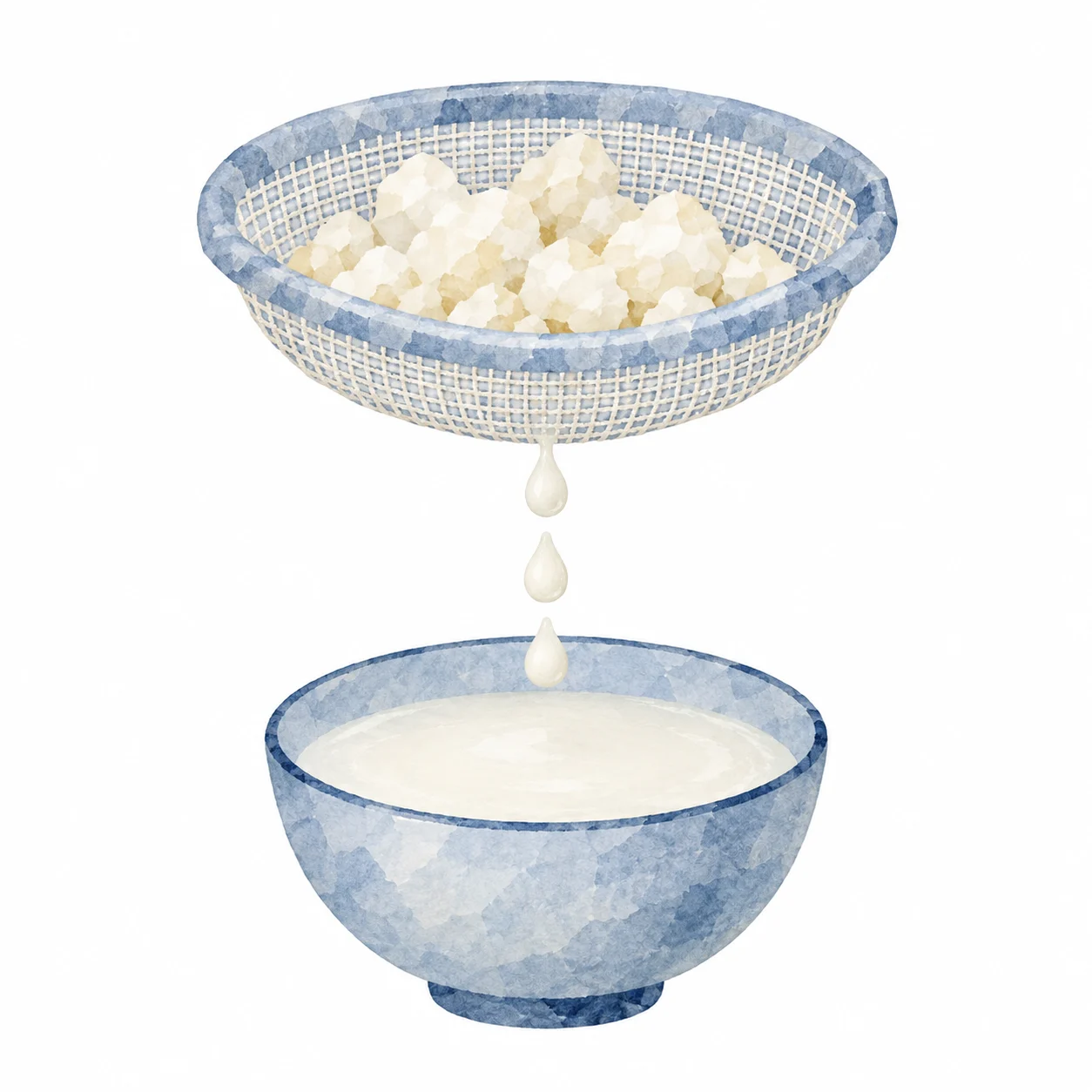
Leave some fine solids
Larger solids are separated out, while fine particles remain in the liquid. Those particles create nigori’s cloudiness.
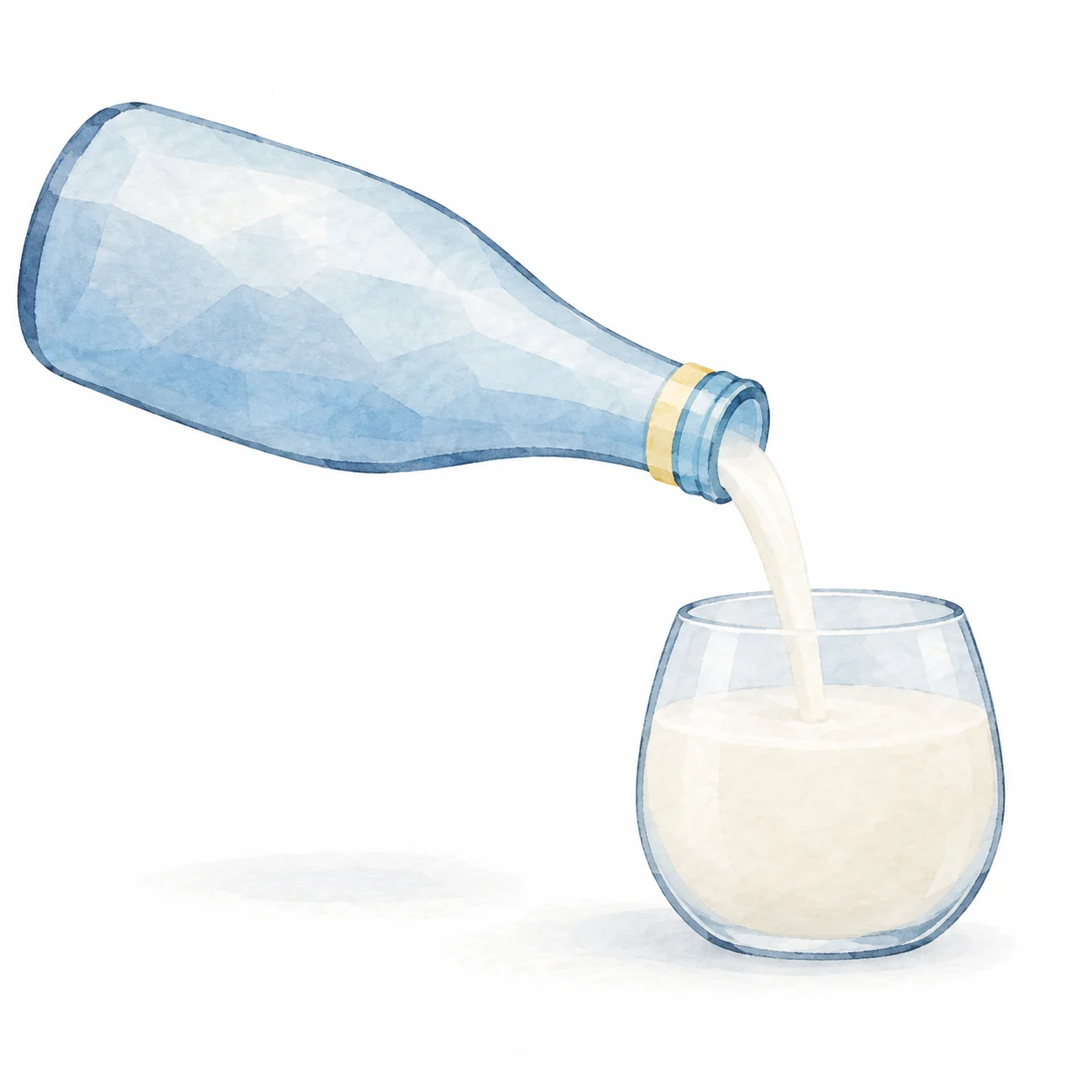
Meet the texture
The finished sake can feel lightly silky or richly creamy, depending on the bottle. The clouds are part of its character.
A simplified view of what makes nigori cloudy. The full brewing journey includes rice preparation, a yeast starter, and finishing and bottling.
Is nigori really “unfiltered”?
You’ll often see that word used in marketing. “Coarsely filtered” is usually the clearer description: nigori has undergone separation, while retaining fine solids. It is not simply a bottle of untouched fermented mash.
Can nigori also be junmai or ginjo?
Yes. Nigori describes its cloudy style; junmai and ginjo describe other aspects of production. The words can sit together on one label. Cloudiness is not a rice-polishing percentage or a quality grade.
Sources: JSS: coarse filtration · Takara: junmai and ginjo nigori. Follow the full process in Brewing & ingredients.
03 · FOLLOW YOUR SENSES
What does nigori sake taste like?
There is no single nigori flavour. Start with three separate questions: how cloudy, how textured, and how sweet?
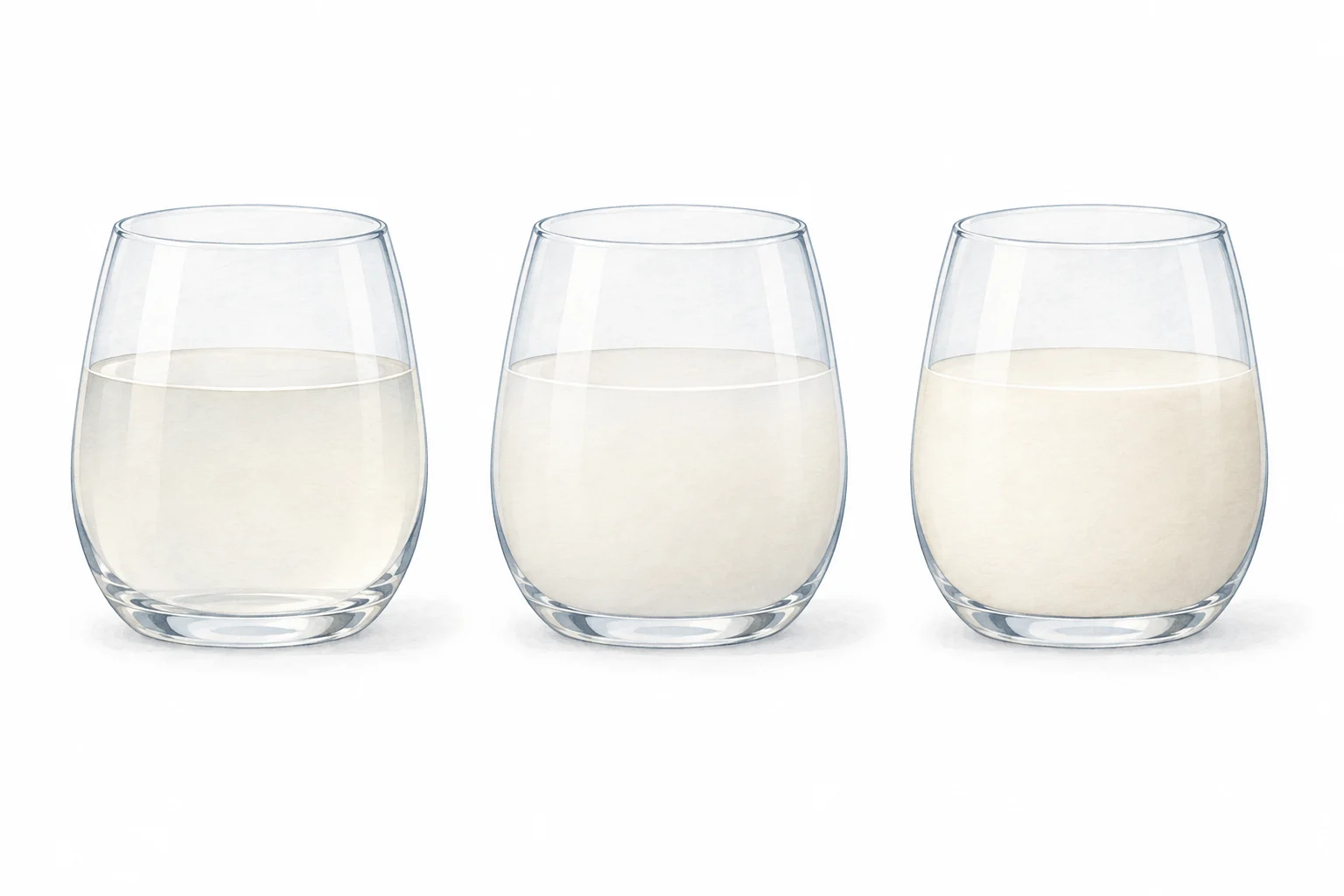
Aroma
You might notice fruit, flowers or fresh rice. Some bottles suggest melon, banana or vanilla; others are quieter and more savoury.
Texture
Fine solids can add softness, weight or a gentle graininess. “Creamy” describes the mouthfeel; it does not mean cream was added.
Sweetness
Many familiar nigori are sweet, but dry examples exist too. Keep sweetness and texture as two separate notes when you taste.
Try a small sip, pause, and notice the finish. Does sweetness linger? Does it turn crisp? Is the texture delicate or substantial? Your own description is more useful than guessing the “correct” tasting word.
Sources: JSS: clarity and texture · Takara: a fruity, creamy example · JSS tasting list: sweet and dry nigori examples.
04 · FIND YOUR FIRST BOTTLE
Which nigori style sounds like you?
These are useful shopping descriptions, with plenty of overlap. Select a mood for a question to ask at the sake shop.
Lightly cloudy
Usu-nigori means lightly cloudy sake. Start here if you’re curious about haze but prefer a less dense mouthfeel.
Silky & rounded
Look for a smooth, milky style. Ask whether the finish is sweet or dry, rather than assuming from its colour.
Rich & sweet
Try a bottle explicitly described as sweet and full-bodied. Check its alcohol strength: rich nigori can pack considerable weight.
Clouds with bubbles
Cloudiness and carbonation can coexist. Some bottles retain fermentation gas; others use added carbonation. Follow the individual label.
Three bottles, three alcohol strengths
These producer examples show why it pays to check the label. They are examples, not a fixed alcohol range for the category.
Other words you might see on the label
Junmai: made without added brewer’s alcohol. Ginjo: a production category associated with more highly polished rice and careful brewing. Nama: unpasteurised. Genshu: undiluted. These can overlap with nigori; none promises a particular sweetness.
For the full explanation, explore sake types and styles.
Sources: JSS: usu-nigori · SakéOne: cloudy and sparkling styles. Alcohol percentages link directly to the producers’ specifications.
05 · FROM BOTTLE TO GLASS
How to serve nigori sake
Start with the label, then let a small pour show you what the bottle can do.
Check whether it’s still or sparkling
Look for bubbles, active fermentation or specific opening instructions. Mixing and opening advice differs between bottles.
Start chilled
Chilled is an easy starting point for many nigori. Follow the producer’s serving advice, then notice how aroma and texture change as your small glass warms a little.
For still nigori, gently bring the clouds together
Sediment naturally settles. If the label recommends mixing, gently roll or tilt the closed bottle to redistribute it. A vigorous shake is unnecessary.
Pour a little and take your time
A small tasting glass makes the colour easy to see and gives the aroma room. Sip, notice the texture, then try a bite of food and sip again.
Sparkling or active nigori? Open differently.
Keep it upright, chill thoroughly, and do not shake before opening. Follow the bottle’s instructions; some producers specify loosening the cap gradually and pausing to let gas escape. The still-bottle mixing step above does not apply.
Can I serve nigori warm?
Chilled is a starting point, not a rule for every bottle. Follow the producer’s recommendation for your still nigori. For a sparkling bottle, keep to its chilled serving and opening instructions.
Sources: Sayuri: chilled or room-temperature serving · SakéOne: redistributing nigori sediment · Uzume: opening active sparkling nigori. Practise the tasting steps in Tasting & serving.
06 · BRING SOMETHING TO THE TABLE
What food goes with nigori sake?
Match the bottle’s sweetness, weight and finish to the dish. These are starting points for experimenting.
Spicy curry & stir-fries
A sweeter, creamy bottle is a useful first experiment with a spicy Thai, Indian or Chinese dish. Try a moderate level of heat so you can still taste both.
Grilled meat & skewers
Explore richer nigori with yakitori, grilled pork or spare ribs. Notice whether its weight stands up to the char and whether sweetness suits the glaze.
Sushi & grilled eel
For delicate sushi, start with a less dense style and compare a small sip. Sweet-glazed eel can invite a richer bottle. Let the toppings and sauce guide your experiment.
Chocolate & dessert
A sweeter nigori is a good place to start with chocolate or nutty desserts. JSS highlights sweet gianduja chocolate as a way to layer rich textures. A dry bottle will give a different result.
Take one sip alone, one bite, then another sip. Does the combination become rounder, fresher, sweeter or heavier? Keep what you enjoy and change the bottle or dish when it doesn’t click.
Producer starting points: Takara: spicy dishes, grilled meat and eel · Kikusui: spare ribs, yakitori and sushi · JSS: nigori with chocolate. The lighter-style suggestion is a WhatSake tasting experiment. Find more ideas in Food pairing.
07 · KEEP YOUR BOTTLE HAPPY
How to store nigori sake
Read before storing
Follow the bottle’s temperature and date instructions. An unpasteurised or active bottle may require refrigeration before opening too.
Refrigerate after opening
Close the cap tightly and keep the bottle upright in the fridge. Avoid leaving it warm on the table between servings.
Enjoy it while it’s fresh
Use the producer’s guidance for how soon to finish it. Sparkling nigori loses bubbles after opening; still bottles also change with time.
Clouds settling to the bottom are expected: this is part of the style. Storage guidance still matters, and there is no single “one week” rule that fits every nigori.
Sources: Takara: storage after opening · Uzume: refrigeration for active nigori · Nigori Awa: fresh serving and bubbles.
08 · THE QUICK ANSWERS
Nigori sake questions, answered
Is nigori sake always sweet?
No. Many well-known bottles are sweet, but dry nigori exists. The cloudiness tells you about retained solids, not a guaranteed sugar level.
Does nigori contain milk?
Its milky appearance and creamy texture come from rice-derived solids. Those descriptions do not mean it contains dairy. Check the ingredients on your particular bottle, especially for flavoured products.
Is nigori sake low in alcohol?
Not necessarily. Our examples above range from 12.5% to 21% ABV. Always read the alcohol percentage on the bottle rather than guessing from its sweetness or appearance.
Should I shake the bottle?
For still nigori, gently redistribute sediment if the label recommends it. For sparkling or active nigori, do not shake before opening; chill it and follow its opening instructions.
Is nigori a lower-quality sake?
No. Nigori describes the cloudy style. It can also carry labels such as junmai or ginjo, and those describe different aspects of its production.
These answers recap the producer and JSS sources linked in the chapters above.