
SAKE STYLES · FOLLOW THE BUBBLES
Sparkling sake,
explained
A little fizz.
A lot to discover.
Bright and fruity, crisp and savoury, or cloudy and creamy: sake with bubbles has more than one personality. Find out how it’s made, choose your style, and make your next pour count.
Explore the bubbles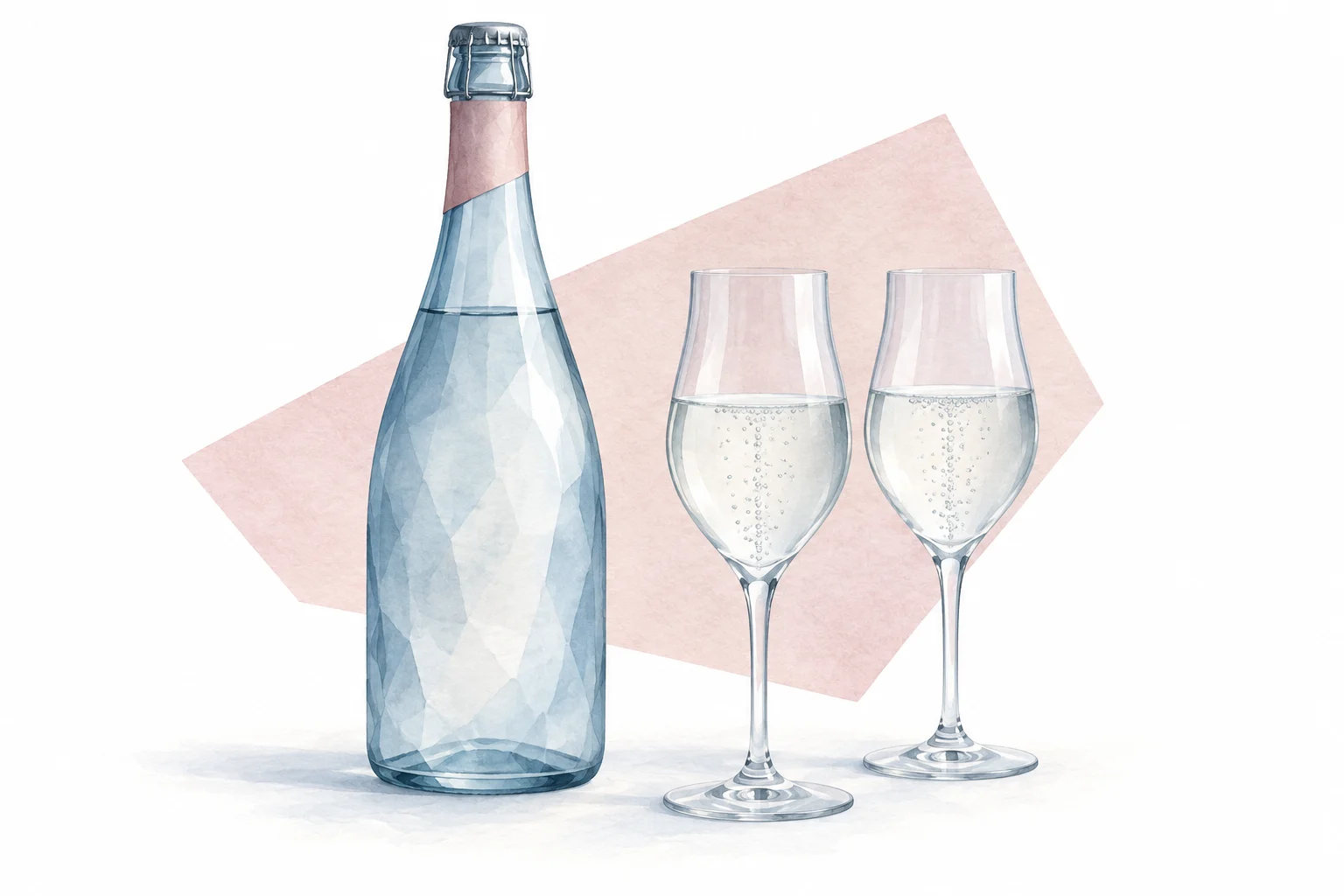
Then let the bubbles do their thing.
01 · A FRESH WAY INTO SAKE
What is sparkling sake?
Sparkling sake is sake with dissolved carbon dioxide, giving it bubbles when you pour and a lively sensation when you sip.
It starts with the same brewing foundation as other sake: rice, water, koji and yeast. The bubbles add another dimension, but they don’t determine everything about the flavour.
Sweet or dry
Some bottles are softly sweet and fruity. Others have a crisper, drier character. Ask about the finish.
Clear or cloudy
Brilliantly clear and lightly cloudy styles both exist. Sparkling nigori combines bubbles with fine suspended solids.
Different strengths
Some sparkling sake is low in alcohol; other bottles are stronger. Read the ABV on the label.
“Sparkling” tells you there are bubbles. It doesn’t promise sweetness, cloudiness or a particular alcohol percentage.
Sources: JSS: clear and cloudy sparkling styles · Masumi: sparkling sake’s flavour and production.
02 · WHERE THE BUBBLES BEGIN
How is sparkling sake made?
Two broad routes: keep carbon dioxide created by fermentation, or add carbonation to brewed sake.
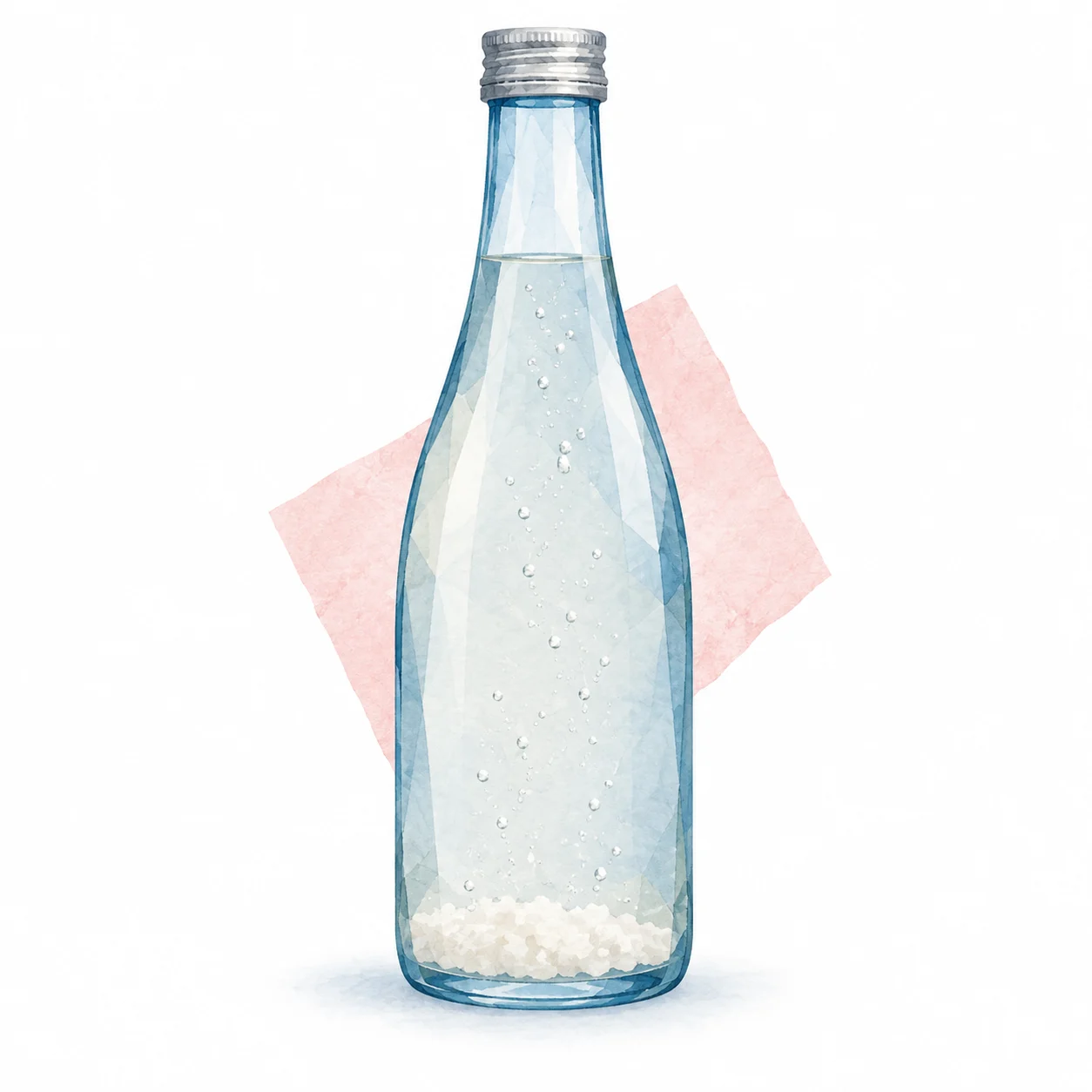
Yeast makes the fizz
Yeast produces alcohol and carbon dioxide as it ferments sugars. When that gas is retained, it dissolves into the sake.
In bottle-fermented styles, further fermentation happens inside the bottle. Some producers remove sediment for a clear result; others leave a cloudy expression.
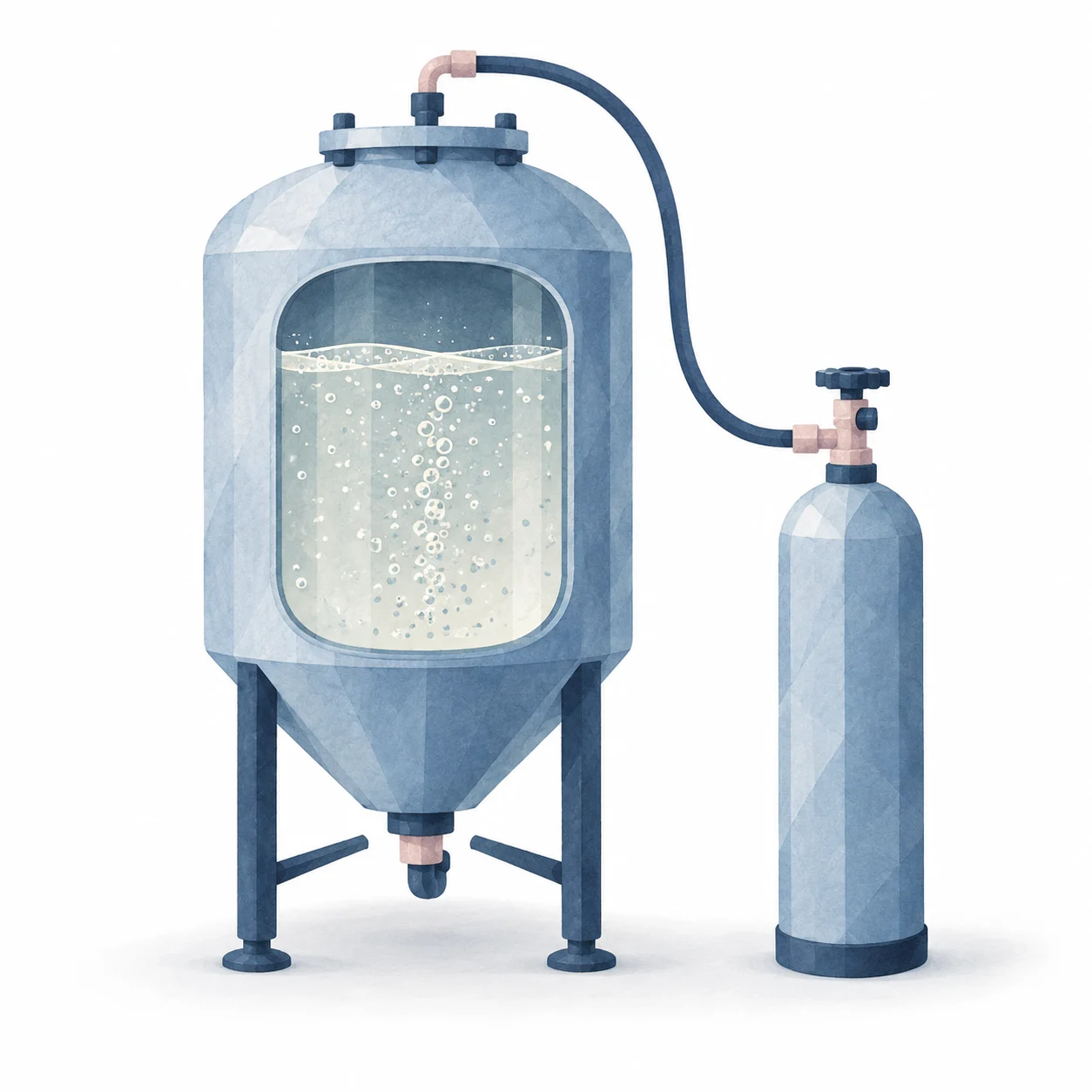
Carbon dioxide is introduced
Brewers can also introduce carbon dioxide to finished sake under pressure, creating a sparkling version of the base sake.
This gives them another way to control the finished expression. Taste the actual bottle rather than assuming a method guarantees a certain bubble size or quality.
Simplified illustrations of the two routes. Individual brewery techniques and finishing steps vary.
Why can bottle-fermented sake be clear?
Some brewers remove the sediment after the bubbles have developed. The Sparkling Sake Brewery describes hand-disgorgement—removing sediment—in its bottle-fermented Festive awa. Cloudiness is a choice of expression, not a requirement for natural bubbles.
Does a little spritz mean it’s a sparkling sake?
Some fresh sake retains a gentle effervescence without being presented as a full sparkling style. The producer’s description is more useful than treating every tiny bubble as the same category.
Sources: JSS: fermentation and added carbonation · Masumi: sparkling and lightly effervescent expressions · The Sparkling Sake Brewery: sediment removal. Explore the brewing foundation in Brewing & ingredients.
03 · FIND YOUR KIND OF FIZZ
What does sparkling sake taste like?
Listen to the fizz, then pay attention to sweetness, acidity, texture and the finish. Bubbles are only one part of the story.
Fruit and floral aromas may sit alongside rice-like or savoury flavours. A bottle can be sweet at first, then finish bright and refreshing. Another might feel creamy and substantial. Use these descriptions as a starting point, with plenty of overlap.
Soft & fruity
Try a sweeter sparkling bottle if you enjoy a softer first sip. Check the ABV separately: a sweet taste is not a measure of alcohol strength.
Crisp & fresh
Ask for a drier expression with a refreshing finish. Acidity can balance sweetness, so a crisp bottle isn’t necessarily sugar-free.
Cloudy & creamy
Fine suspended solids can add texture to the bubbles. Look for nigori or lightly cloudy styles, then ask about sweetness and opening advice.
Savoury & layered
Some bottles combine lively acidity with deeper, savoury notes. Explore this direction if you want sparkling sake to accompany a meal.
Take a small sip just after pouring, then another after a few minutes. Notice how the bubbles, aroma and texture change. This is an experiment, not a test with a right answer.
Flavour examples: Takara MIO CRISP · Masumi Sparkling · Shichiken Yama no Kasumi. These four descriptions are WhatSake’s tasting prompts, rather than official categories.
04 · PUT SOME NAMES TO THE STYLES
Sparkling sake bottles to learn from
A few producer examples make the range easier to picture. Availability varies, and each producer’s current label is your final reference.
MIO CRISP
Takara describes a light, fruity expression with citrus and melon notes. A useful example of a lower-alcohol sparkling sake.
Read the producer’s notes →Masumi Sparkling
A clear expression combining fine bubbles, bright acidity and sake’s savoury character. The producer recommends deeply chilled serving.
Read the producer’s notes →Shichiken Yama no Kasumi
This bottle shows how a cloudy expression can coexist with delicate bubbles and a rounded mouthfeel.
Read the producer’s notes →Mizubasho Pure
Nagai Shuzo’s sparkling sake brings another expression of bottle fermentation, with fruit-like aromatics and silky effervescence.
Read the producer’s notes →What does AWA SAKE certification mean?
The awa sake association certifies bottles against a defined set of standards. They include fermentation-derived carbonation, visual clarity, at least 10% alcohol, and a minimum gas pressure of 3.5 bar at 20°C, alongside ingredient and rice requirements.
That is a specific certification. A cloudy bottle or a lower-alcohol sparkling sake can still be enjoyable without qualifying for it. “Sparkling sake” is the broader description.
Three moments in the modern story
- 1998
Suzune arrives
Ichinokura launches Suzune, following years of work on lower-alcohol and naturally sparkling expressions.
Ichinokura’s history → - 2008
Mizubasho Pure debuts
Nagai Shuzo introduces Pure after a decade of development, bringing a new interpretation of bottle-fermented sake.
Nagai Shuzo’s account → - 2016
A shared standard takes shape
The awa sake association is established to develop and promote its certified sparkling sake category.
The association’s story →
05 · A CALM OPENING, A LIVELY POUR
How to serve sparkling sake
Cold bottle, gentle handling, small pour. The exact opening instructions depend on what you’ve bought.
Chill according to the label
Serve sparkling sake chilled. Producers may specify different temperatures, especially for opening, so use their instructions instead of one temperature for every bottle.
Keep it steady and open carefully
Do not shake before opening. Keep the bottle pointed away from people and follow its cap or cork instructions. For active nigori, some producers specify opening gradually and pausing to let gas escape.
Choose a glass with room to enjoy it
A tulip-shaped wine glass is an easy place to start for aroma and texture. A flute also works, and several producers recommend one. Try both with a small pour and notice what changes.
Pour a little, then sip
Leave space above the sake for foam to settle. Look at the bubbles, smell gently, and take a small sip. Notice acidity and sweetness first, then texture and the finish.
Cloudy and sparkling? Check before mixing.
Still-nigori mixing advice is not a blanket rule for sparkling nigori. Read the producer’s instructions before redistributing sediment. Active bottles can foam strongly if handled incorrectly.
Sources: Masumi: specific chilling and opening guidance · Uzume: active nigori handling · Shichiken: chilled serving in a flute. The glass comparison is a WhatSake tasting exercise. Learn more in Tasting & serving.
06 · FIND A BITE FOR YOUR BUBBLES
What food pairs with sparkling sake?
Choose the bottle’s character first. These tags suggest a direction; they don’t make a pairing inevitable.
Seafood & sushi
Start with a bright bottle alongside sashimi, oysters or salt-grilled fish. Masumi lists these as companions for its sparkling expression. Rich sauces may call for more weight.
Cheese & savoury bites
Try a bottle with some savoury depth for aged cheese, or a lighter fruity one for mild white cheese and small appetisers. The cheese’s intensity matters.
Chicken, quiche & sharing plates
Ichinokura suggests cheese and quiche with Suzune Wabi, and also lists grilled chicken. These are approachable starting points for a mixed table of small dishes.
Fruit & lighter desserts
Start with a sweeter, fruity bottle beside a fresh fruit plate or pound cake, as Takara suggests for MIO CRISP. A very sweet dessert can change how the sake tastes.
Taste the sake alone, take a bite, then sip again. If the pairing makes the sake seem thin, sharp or overly sweet, try a different dish or style.
Producer pairing suggestions: Masumi Sparkling · MIO CRISP · Ichinokura Suzune Wabi. More ideas in Food pairing.
07 · KEEP THE FIZZ FRESH
How to store sparkling sake
Before opening
Read the storage instructions when you buy it. Some sparkling sake requires refrigeration even while unopened. Follow the date guidance too.
After opening
Refrigerate any remaining sake and use a closure suitable for that bottle and sparkling drinks. Follow the producer’s instructions, especially for active bottles.
Enjoy the fresh bubbles
Carbonation fades after opening. Plan smaller bottles or shared pours if you want the liveliest experience, rather than relying on a fixed number of days.
A bottle that has lost some fizz will taste different. That does not replace its storage and freshness guidance: use the producer’s advice for the specific product.
Sources: Masumi: refrigerated storage · Ichinokura: keeping Suzune fresh · The Sparkling Sake Brewery: bubbles after opening.
08 · A FEW LAST QUESTIONS
Sparkling sake questions, answered
Is sparkling sake the same as sparkling wine?
No. Sake is brewed from rice using koji and yeast. Some sparkling sake uses bottle-fermentation techniques familiar from sparkling wine, but its ingredients and brewing foundation are different.
Is sparkling sake always sweet or low in alcohol?
No. Sweetness, acidity, body and alcohol strength vary independently. The examples above include 5%, 12% and 13% ABV; those are individual products, not the category’s limits.
Is sparkling nigori a different drink?
It is an overlapping style: sparkling describes bubbles, while nigori describes cloudiness from retained fine solids. A bottle can have both. Explore the nigori guide for the texture story.
Is bottle-fermented always better than added carbonation?
A method tells you how the bubbles were made, rather than whether you will enjoy the result. Compare aroma, texture, sweetness and finish in the actual glass.
Can sparkling sake be served hot?
Follow the producer’s chilled serving instructions for sparkling bottles. Heating is not the serving approach used in this guide.
What should I ask in a sake shop?
“I’d like a sparkling sake that is [sweet, crisp, cloudy or savoury]. What is its alcohol strength, does it need refrigeration, and how should I open it?” That gives you much more useful information than asking for the bubbliest bottle.
These answers recap the brewing and producer sources linked throughout the guide.